
Blood Pressure on Your Wrist: What Cuffless Monitoring Can Do and Why It Cannot Yet Replace a Blood Pressure Monitor
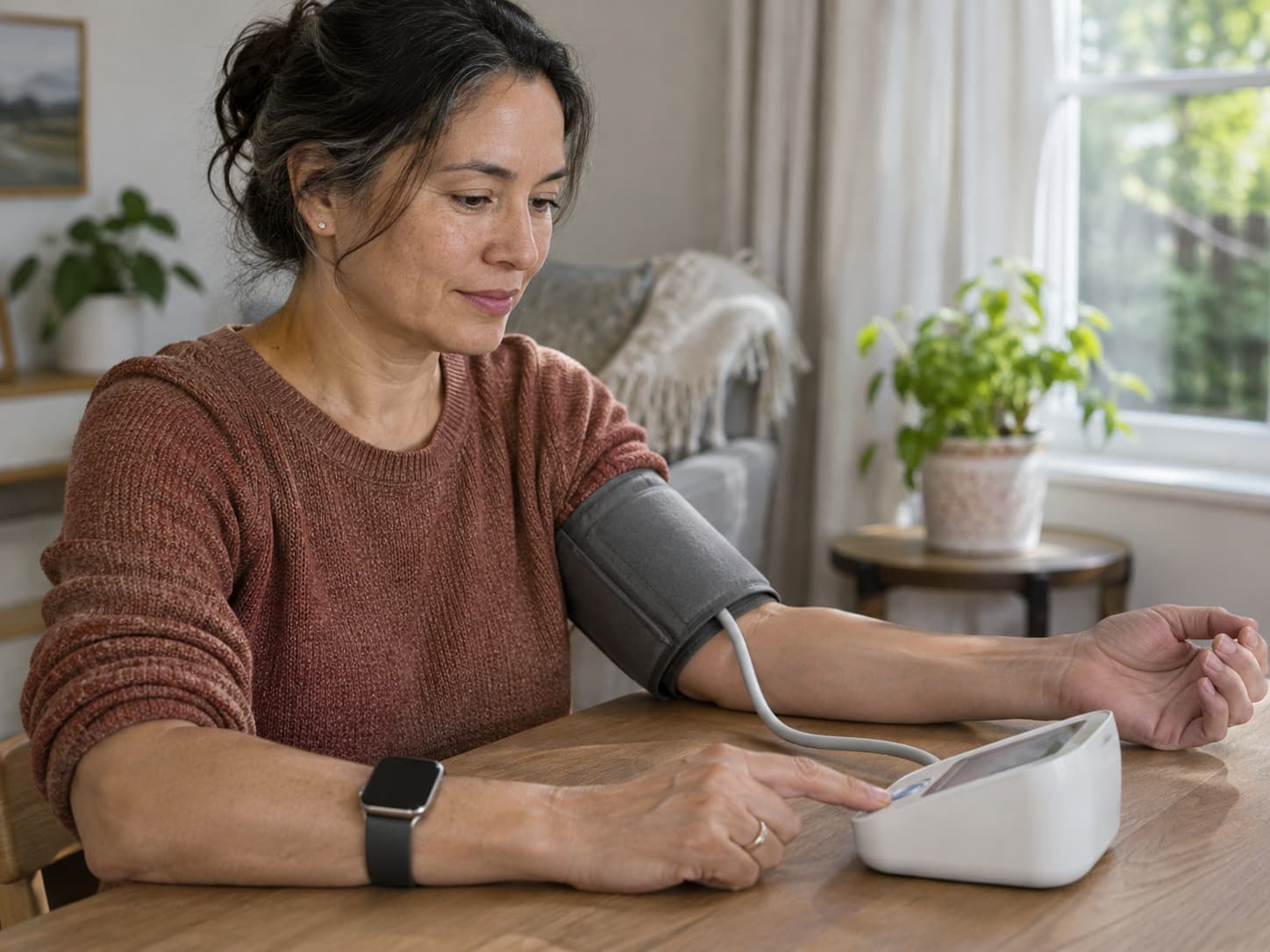
Checking blood pressure without a cuff sounds like a natural next step for smartwatches. Instead of sitting down with a traditional monitor, users could glance at their wrist and receive information about their cardiovascular health. Some devices already estimate blood pressure, while others identify patterns associated with hypertension. However, these functions work differently, and their results are not equally reliable. Understanding what the technology actually measures is essential before trusting it with important health decisions.
How Smartwatches Estimate Blood Pressure Without a Cuff
Traditional blood pressure monitors use an inflatable cuff to detect changes in arterial pressure. They report two values: systolic pressure when the heart contracts and diastolic pressure when it relaxes. Cuffless devices approach the problem indirectly, analyzing signals associated with blood circulation rather than measuring pressure through controlled compression.
Many smartwatches use photoplethysmography (PPG), an optical technology that illuminates the skin and detects changes in blood volume with each heartbeat. Algorithms examine characteristics of the resulting pulse waveform and estimate how they relate to blood pressure. Some systems also use pulse transit time, which describes how long a pressure wave takes to travel between measurement points. Machine learning can help identify patterns, but it cannot eliminate the physiological differences between users. Arterial stiffness, vascular characteristics, and other individual factors influence the relationship between pulse signals and actual pressure.
This distinction explains why measuring heart rate is generally easier than estimating blood pressure. A pulse sensor can identify repeated changes associated with heartbeats, but converting those signals into accurate pressure values requires additional assumptions and validation. Two people with similar pulse waveforms may have different blood pressure readings, particularly when their vascular conditions differ.
Why Calibration Does Not Guarantee Accuracy
Some cuffless systems require calibration against a conventional blood pressure monitor. Samsung’s Galaxy Watch blood pressure feature, available to eligible US users since March 2026, is an example. Compatible devices require an upper-arm cuff for initial calibration and recalibration every 28 days. The smartwatch then uses sensor information and its calibration reference to estimate systolic and diastolic values.
Calibration improves the relationship between optical measurements and actual pressure, but that relationship can change. Physical activity, medication, temperature, body position, and vascular responses may affect subsequent readings. A watch calibrated while its owner is resting might perform differently after exercise or during periods of emotional stress. Repeating calibration also introduces another source of error if the reference monitor is inaccurate or used incorrectly.
Sensor positioning creates additional difficulties. A loose strap can affect optical measurements, while wrist movement may distort the recorded signal. Changes in arm position matter because the pressure difference between the wrist and heart level influences readings. Skin characteristics and sensor contact can also affect performance. These variables explain why accuracy demonstrated under controlled laboratory conditions does not necessarily translate into dependable everyday monitoring.
Apple Watch Alerts Are Not Blood Pressure Measurements
Not every smartwatch offering hypertension-related features provides numerical blood pressure readings. Apple’s hypertension notification system illustrates this difference. Introduced in 2025, the feature analyzes information collected by the optical heart sensor over approximately 30 days, looking for patterns associated with chronic high blood pressure.
The system does not display systolic or diastolic pressure. Instead, it can notify eligible users when its algorithm identifies signs that may indicate hypertension. Receiving such a notification is a reason to investigate further using established measurement methods, not confirmation of a diagnosis. Equally important, the absence of an alert does not establish that blood pressure is normal.
Samsung’s approach is different because its supported watches can display estimated pressure values after calibration. However, Samsung states that the function is not intended to diagnose disease or guide treatment. In the United States, it is offered as a wellness feature rather than an FDA-cleared medical function, which is why its readings should not be treated as equivalent to those from a validated cuff monitor. These differences are particularly important for consumers comparing wearable health features. A device that estimates pressure, one that detects possible hypertension patterns, and a validated medical monitor serve different purposes, even when their interfaces appear similar.
Why Medical Experts Still Recommend a Traditional Monitor
In December 2025, the American Heart Association published a scientific statement examining cuffless blood pressure technologies. The organization acknowledged their potential for convenient monitoring during daily activities and sleep but emphasized that accuracy and clinical usefulness remain uncertain. Existing research does not yet establish sufficient reliability for cuffless devices to replace validated monitors in diagnosing or managing hypertension.
The 2025 American Heart Association and American College of Cardiology guidelines recommend against using cuffless devices for these medical decisions. The US Food and Drug Administration also warned consumers in September 2025 about unauthorized wearable products claiming to measure blood pressure. Inaccurate results can create false reassurance, delay necessary treatment, or encourage inappropriate medication changes.
For home monitoring, the American Heart Association recommends a validated automatic upper-arm device with a correctly sized cuff. Accurate readings also depend on technique. Users should avoid caffeine, smoking, and exercise for at least 30 minutes beforehand, sit quietly for five minutes, and support their arm at heart level. Taking two measurements approximately one minute apart provides more useful information than relying on a single reading. Consistent records can then help a healthcare professional assess changes over time.
Where Cuffless Monitoring Could Become Useful
Despite current limitations, cuffless technology has considerable potential. A comfortable wearable could eventually collect information about blood pressure fluctuations throughout ordinary activities, potentially providing insights that occasional measurements miss. Overnight monitoring is particularly interesting because blood pressure changes during sleep can carry clinical significance. However, collecting more readings is valuable only when the measurements are sufficiently accurate and their interpretation has been validated.
For developers of mobile health applications, the challenge extends beyond sensor hardware. Applications need clear explanations of what each value represents, how recently a device was calibrated, and whether a measurement meets acceptable quality standards. Interfaces should distinguish estimated measurements from medical diagnoses rather than presenting every number with identical confidence. Poorly designed notifications may create unnecessary anxiety, while missing warnings could give users a misleading sense of security.
Responsible software design also means avoiding unsupported claims about precision. Even regulatory clearance is not proof of accuracy: the American Heart Association notes that FDA clearance for a blood pressure device does not require formal accuracy testing under a standardized protocol. Displaying an estimated blood pressure value to the nearest millimeter of mercury can suggest a level of certainty that the underlying technology has not demonstrated. Future improvements will require stronger clinical validation, better motion correction, and reliable performance across diverse populations and everyday conditions.
Should You Trust Blood Pressure Readings From a Smartwatch?
A smartwatch can provide convenient information about cardiovascular patterns, and certain features may encourage users to investigate possible hypertension. However, convenience is not equivalent to clinical accuracy. Anyone monitoring diagnosed hypertension, evaluating treatment effectiveness, or making medication decisions should rely on a validated blood pressure monitor and professional medical guidance.
Cuffless monitoring represents a promising direction for wearable technology, but its greatest achievement will not simply be removing the inflatable cuff. It will be demonstrating that measurements remain trustworthy outside controlled conditions. Until that standard is consistently met, smartwatches are better viewed as supplementary health tools rather than replacements for traditional blood pressure monitors.